
According to the latest statistics available in 2013, the cultivated area of pistachio orchards in the country is 674,309 hectares of fertile and non-fertile orchards, of which about 600,000 hectares belong to fertile orchards.
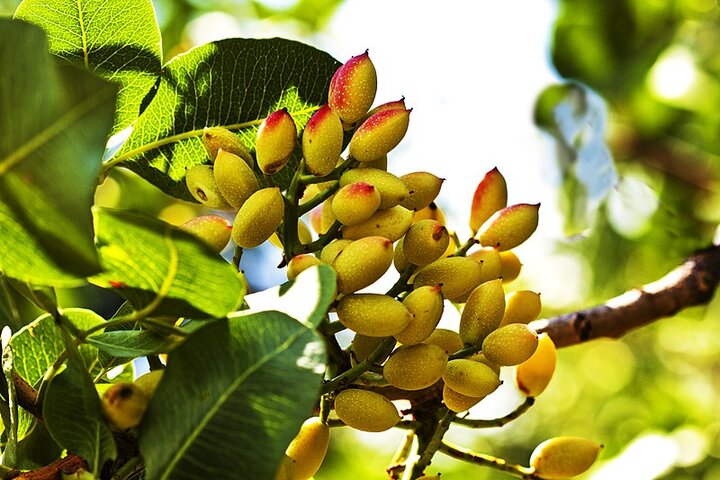
These orchards are scattered in 31 provinces of the country (including the coastal provinces of Bushehr, Hormozgan, Gilan and Mazandaran), with 85 percent of the cultivated area belonging to 6 provinces of Kerman, Khorasan Razavi, Yazd, Fars, South Khorasan and Semnan.
Iran has the richest pistachio germplasm and ranks first in the world. Of the total of 11 species in the pistachio family, 3 species, including domestic pistachio (Pistacia vera), wild pistachio (Pistacia mutica) and wild pistachio Khinjuk (Pistacia khinjuk), are found in different regions of the country, and in addition to the traditional use of domestic fruits, they can also be used for the traditional use of its fruits. Varieties
All existing pistachio cultivars are domesticated, and in Iran, local domesticated pistachio cultivars are used as the commercial base for pistachio, while in other pistachio-producing countries, other species are used as the base for domesticated pistachio cultivars.
The greatest diversity of pistachio cultivars exists in Iran. Currently, about 150 pistachio cultivars and genotypes have been identified, collected, and maintained by research colleagues and those interested in this subject in the country’s pistachio collections in the provinces of Kerman (Rafsanjan and Kerman), Semnan (Damghan), Qazvin (Qazvin), and Khorasan Razavi (Faei). While there are still more than 150 identified genotypes that have not been included in the collections, and efforts should be made to preserve and maintain them in this regard.